
I have added Hopelab to the suicide prevention and mental health resources page. “Inspired by hope, realized by science. Hopelab is a social innovation lab focused on designing science-based technologies to improve the health and well-being of teens and young adults." Visit their website to see the range of important work they are doing, and read more articles from their fascinating blog.
#BeThe1To help them connect • @raderwardfoundation • Instagram

Rader Ward Foundation (@RaderWardFound) | Twitter
#BeThe1To create a safety plan!
As National Suicide Prevention Month continues, here’s another idea from the folks at the Lifeline to help keep yourself or someone you care about safe.
Indie Craft Parade | @RaderWardFound | Twitter
100 ways to make it through the next 5 minutes
Check out this cool interactive infographic from the Lifeline on Piktochart for National Suicide Prevention Week.
#BeThe1To be there • @raderwardfoundation • Instagram

National Video Games Day: Take This
#worldsuicidepreventionday2018
Today is World Suicide Prevention Day. #BeThe1To make a difference — stepping forward and reaching out can help save lives. If you're on Facebook, Twitter, or Instagram, please click the links to follow Rader Ward Foundation, and share our messages with your friends. You never know who needs to hear this lifesaving information.

NSPW/Yellow Ribbon Week
Today begins National Suicide Prevention Week, which is also Yellow Ribbon Week. I want to share an important resource with you from our suicide prevention resources page: the Yellow Ribbon Suicide Prevention Program of the Light for Life Foundation International. For nearly a quarter century, Dale and Dar Emme have been doing the work of keeping other struggling kids alive since losing their teenage son to suicide. From their website, https://yellowribbon.org/, here's their story.
Legacy of the Yellow Mustang
The Yellow Ribbon program was founded in 1994 by the parents and friends of a bright, funny, loving teen, Mike Emme, who took his life when he did not know the words to say, or how to let someone know he was in trouble and needed help.
“Don’t blame yourselves, Mom and Dad, I love you.” It was signed, “Love, Mike 11:45 pm”. In a move that totally stunned all who knew him, Mike died by suicide at the time of his deepest despair. At 11:52 pm his parents pulled into the driveway behind that bright yellow Mustang – seven minutes too late!
The legacy started when Mike rescued a 1968 Ford Mustang from a field where it sat neglected. He bought it, rebuilt it (as he had others) and painted it bright yellow. As Mike, with his Mustangs, became more and more known for his mechanical ability and for helping other teens and friends – he became known as “Mustang Mike”.
Streams of stories began emerging of the help Mike had given to people. A young mother’s car had broken down late one night, leaving her and her two small children stranded on the side of the road. Mike stopped and showed her his driver’s license to assure her he would not harm them, got her car started, then accompanied them home to ensure they arrived safely.
A classmate told of how Mike had canceled his order for a new transmission and bought two used ones from the salvage yard instead so that his classmate could get his car running too.
As the teens gathered to comfort the family, and each other, they discussed the tragedy of losing Mike. Mike’s mom talked with the teens about creating mementos that others could have to remember him with, and they decided that yellow would be used in honor of the cherished yellow mustang. In response to teens asking what can we do? – she told them, ‘don’t do this, don’t attempt suicide’. ‘If you are ever at this point of pain/despair, please ask for help’! Kids took notes, and cards were made with the message to reach out for help, that It’s OK to Ask4Help!
The night before Mike’s memorial services, his friends shared their grief and tears as they pinned 500 ribbons on the cards. They were placed in a basket at his services. At the end of the services, all the ribbon cards were gone, and it could have ended then, but it did not, thanks to teens with the courage to make a difference and a family who cares about helping others.
Three weeks after Mike’s services – just three weeks! – a call came from a teacher in Wyoming who had a student give her one of those messages of when she needed help. The girl had received in the mail from a friend. The teacher called because she wanted to get help for teens in her area. Other calls began to come in from throughout the U.S., then letters began to flood in – teens were sending those messages/cards everywhere, and The Ripple Effect had begun!
The ribbon became the symbol of the program when the teens began tying them in their hair and pinning them to their clothes and hats on the day Mike died. Yellow in memory of Mike and his cherished ’68 yellow Mustang, and how he helped so many people.
The HEART in the middle of the ribbon is the symbol of the survivors. Our hearts go on, forever broken, but nurtured and surrounded by the Yellow Ribbon family to help others, to save lives and to work in memory of our loved ones. Our voices will speak for those who cannot.
The Ask 4 Help! cards are at the heart of the Yellow Ribbon Suicide Prevention Program. These cards are a ‘voice’ for youth when they can’t find the words to say “I need help.”
-----
To order or print your own Ask 4 Help! cards, click on the "Ask 4 Help! cards" button on the yellowribbon.org home page.
Yellow Ribbon Suicide Prevention International, Born This Way Foundation
#YRTogether #BeALink #BeKind21 #SuicidePrevention #YRWeek #NSPW
@raderwardfoundation • Instagram • BeThe1To keep them safe

ESPN's Ivan Maisel on the Hilinskis and 'the club no one wants to join'
Seven months after the death of Tyler Hilinski, ESPN's Ivan Maisel and the Washington State quarterback's family are connected by a pain they hope we never understand.
@raderwardfoundation • Instagram • #BeKind21

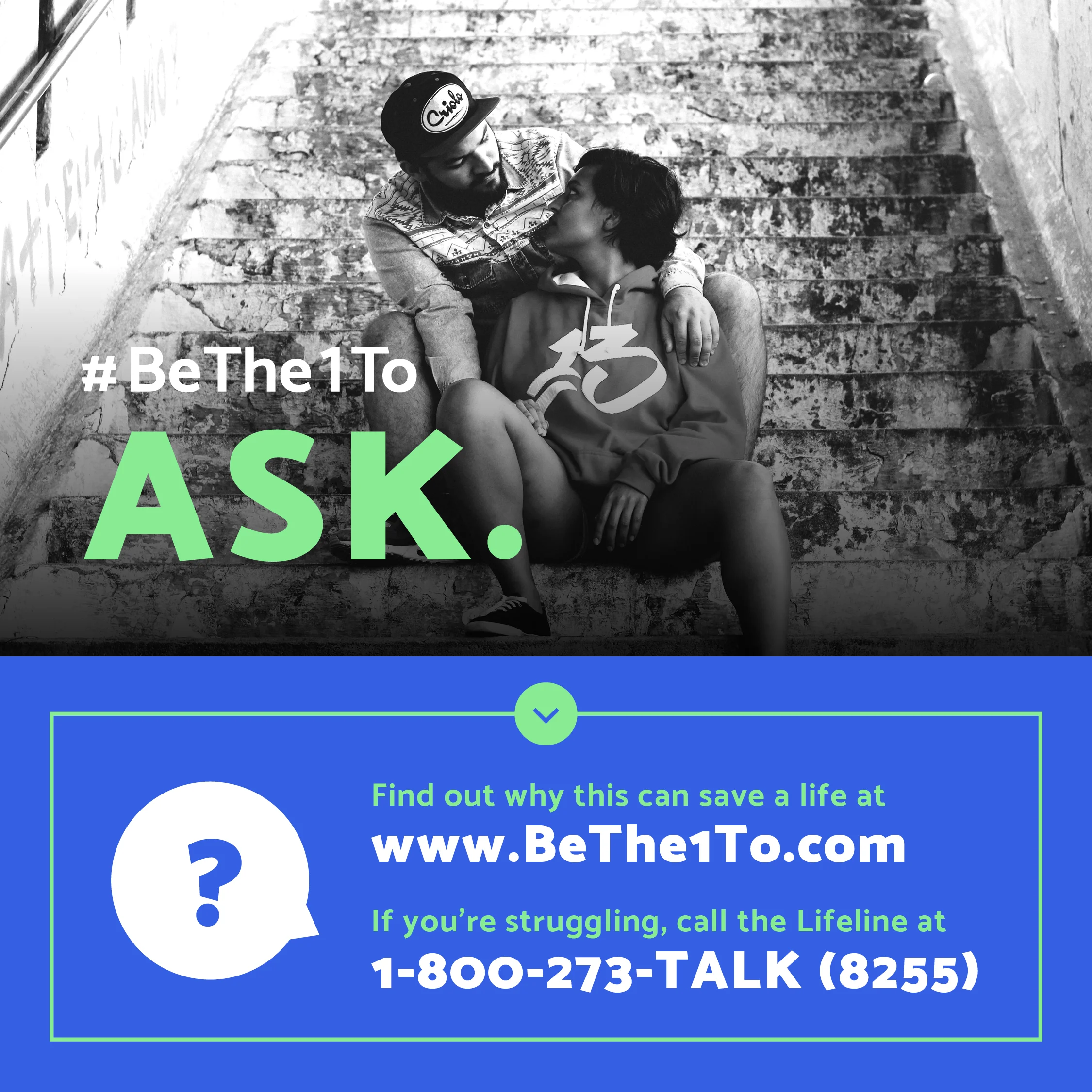
BeThe1To ... ASK
If I could change anything about my approach to Rader's mental health in the months before his suicide, it would be this: I would ask the question, "Are you thinking about suicide?"
It's not that I wasn't asking anything of the sort. When he started on an antidepressant in the spring, I read him the black box warning. I wanted him to be clear that while antidepressants are helpful in many cases, sometimes for young people, they have been reported to cause suicidal thoughts. And so I told him, if he should begin to have such thoughts, it would be scary, but to know it was just the medicine's influence on the chemicals in his brain; to tell us about it, and we would fix it. And for weeks, because we didn't know how he would respond to the medication, we didn't leave him alone at all. At first, he said he didn't feel like the medicine was doing anything. Then he said maybe he was starting to feel a little better. After six weeks or so, the psychiatrist felt he seemed to be tolerating the drug and we could increase the dose. We did that and didn't see any signs of negative side effects, so we relaxed our supervision somewhat.
Once we started allowing him to be by himself again, I would check in with him every time I was going to leave the house. I would walk into the computer room (he was always working on making new games or projects) and tell him where I was going and how long I'd be gone, and that he could reach me on my phone whenever he needed. I would ask him if he was OK. What I meant was, "Is it safe to leave you; are you thinking of harming yourself?" But I didn't come right out and say that. I was afraid to, afraid of the power of suggestion, that if I mentioned suicide, it could push him in that direction. I didn't know studies * * * have proven that old idea wrong.
And so that Wednesday night, the first one after school got out for the summer, I went to see him at the computer, and I told him where everyone in the family was going to be, and when we'd get back, and that he could text me if he needed me. And I asked if that was OK, if he was OK. And he said yes. The last thing he ever said to me was that he was OK.
So ASK is the first of the five action steps that BeThe1To has for communicating with someone who may be suicidal. It's the one that hits me the hardest, because I didn't know. If you're concerned about someone's mental health, please ASK. If you don't know how, or what to say, Seize the Awkward can help. Studies show you don't have to be afraid to be direct.
ASK. It's a matter of life and death.
new resource: Seize the Awkward
Today for my Born This Way Foundation #BeKind21 action, I'm sharing this great new resource I just learned about, Seize the Awkward. If you're worried about someone, but don't know what to say, Seize the Awkward has you covered, Thanks to the American Foundation for Suicide Prevention for tweeting about it.
Nobody likes an awkward silence. In fact, we usually try to avoid it. But sometimes, an awkward silence can be a good time to check in with a friend about their mental health.
Mario Music Monday: Lady Gaga's 'Telephone'
For Mario Music Monday, today it's a crossover with Lady Gaga, as I'm promoting her 21 days of kindness in partnership with the Born This Way Foundation and #BeKind21. Since September is National Suicide Prevention Month, I'm getting the word out. Join the National Suicide Prevention Lifeline '1-800-273-TALK (8255)' as they encourage others to #BeThe1To help someone else.
