
Happy Pi Day (3.14)! Credit to @sandra_boynton for the illustration.
🐷
Rader loved math and was particularly interested in mathematical constants such as pi and e. (Second photo is a note on which he was practicing his memorization of the digits of pi. At that time — probably middle school — he had made it to 40 digits. I’m not sure if he continued to memorize more.)
🐔
We also have a long-standing family fondness for Sandra Boynton. The third photo is one she posted yesterday as she was working on updating the Spanish versions of her board books. She ran “Moo, Baa, La La La!” through Google Translate back into English. I read it to my husband, and we both remembered the original from way back in the day.
❤️
💙
💛
#piday #piday2020 #sandraboynton #pi #mathematicalconstant #moobaalalala #memories #loveandloss
self care ideas from mellow doodles
protecting your mental health in a time of uncertainty
Thanks to psychologist Doreen Marshall of the American Foundation for Suicide Prevention for thoughtful and common-sense advice for attending to our mental health in this time of uncertainty. Read on for her five simple suggestions you can implement today.
“Human beings like certainty. We are hard-wired to want to know what is happening when and to notice things that feel threatening to us. When things feel uncertain or when we don’t generally feel safe, it’s normal to feel stressed. This very reaction, while there to protect us, can cause all sorts of havoc when there is a sense of uncertainty and conflicting information around us.
“A large part of anxiety comes from a sense of what we think we should be able to control, but can’t. Right now, many of us are worried about COVID-19, known as the “Coronavirus”. We may feel helpless about what will happen or what we can do to prevent further stress. The uncertainty might also connect to our uncertainty about other aspects of our lives, or remind us of past times when we didn’t feel safe and the immediate future was uncertain.
“In times like these, our mental health can suffer. We don’t always know it’s happening. You might feel more on edge than usual, angry, helpless or sad. You might notice that you are more frustrated with others or want to completely avoid any reminders of what is happening. For those of us who already struggle with our mental wellness, we might feel more depressed or less motivated to carry out our daily activities.”
Marshall concludes: “We are in this together, and help is always available. If you’re feeling alone and struggling, you can also reach out to The Crisis Text Line by texting TALK to 741741 or National Suicide Prevention Lifeline at 1-800-273-TALK.”

one breath at a time
I’m starting to feel a little overwhelmed today. I am thankful for these encouraging words from @littlearthlings.
❤️
I was looking forward to going with my husband on a business trip later this month to New Orleans, a great place I haven’t visited before. Conference setting has been changed to virtual rather than in-person. We’ve canceled our reservations.
💙
There’s been conflicting information circulating since last night about whether my kid’s college was going to cancel an additional week of classes after spring break. (That has just now, as I type, been officially confirmed on the @uofsc Twitter account. The waiting and wondering was doing me no favors.)
💛
The community where my mom lives has requested everyone refrain from visiting (out of an abundance of caution, not because anyone there is sick). I’m not anxious *about* COVID19, but the disruption of routines and plans makes me feel so unsettled.
🌎
The world is an unpredictable place. It’s ok to have feelings about it! Today I recognize that I am having difficulty, and my plan is to slow down and make small decisions, one at a time.
🌤
How are you doing today?
❤️
💙
💛
#littlearthlings #gentlereminders #onedayatatime #onestepatatime #onebreathatatime
happy MAR10 day!
levi's and mario team up for new fashions
happy international women's day!
mental health is health
wise words: how to grieve
the best pick-me-up flowchart
5 ways to prevent LGBTQ youth suicide
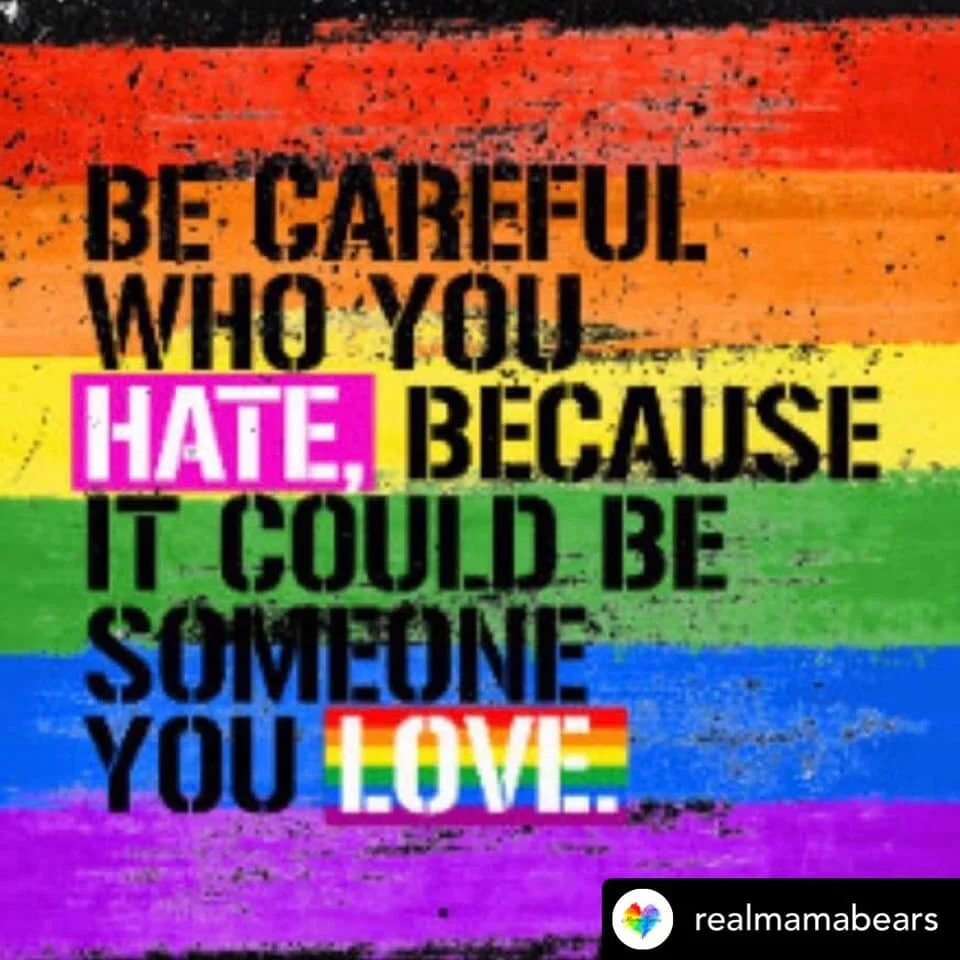
I am passionate about suicide prevention, as you all know. Among the many populations at increased risk for suicide, the community of LGBTQ youth is one I will always be a fierce advocate for.
Maybe you assume that means Rader might have been gay. I don't think so; that's not something we had any indication of, although I can say with certainty that he was aware our love for him would not have changed based on whom he was attracted to.
I'm particularly fired up about this topic right now because in Greenville County, S.C., where I live, the County Council is dragging its feet on rescinding a 1996 resolution condemning the "gay lifestyle" as "incompatible with community values." I have attended the two most recent County Council meetings (they meet every two weeks on Tuesday nights), where discussions of the resolution are ongoing. I am horrified at the ignorance and hatred I have heard spewing from the mouths of members of the community who identify themselves as Christians and claim to speak for the majority of the people in Greenville County.
They say they believe in "traditional family values." Look at me. I married in my 20s, worked to put my husband through medical school, then we raised two kids with me as a stay-at-home mom. Twenty-seven years later, I'm still married to the same man. We own a home; we pay our taxes; we are putting a kid through college. We are a pretty traditional family. But my values are VERY different from these folks who claim that most of the population of Greenville County still believes a) that there's such a thing as a "gay lifestyle," and b) that it interferes with their desire to live according to their own beliefs, so much so that our government should step in and stand up for them.
Statistically speaking, some of these "traditional family values" people likely have children who align somewhere within the LGBTQ community. These are children who may be terrified to come out to their families, and rightly so, for the statistics also don't lie that many of them will be punished, shunned, rejected, and even thrown out for admitting who they are. These kids, the ones whose own families condemn them, who find no refuge with the people whom they should be able to count on to provide unconditional love, are among the most likely to suffer depression and anxiety, and to die by suicide. Be careful who you hate; it might be someone you love.
Do these "Christians" not know this literally is a matter of life and death? I can't believe they could know and not care.
If this is an uncomfortable conversation for you, if it surprises you to hear there are many good people who have reconciled their Christian beliefs with their support of or membership within the LGBTQ community, know that there are abundant resources available to explain how they got there, if you're open to them. One great place to start is Serendipitydodah Public Page - A Place of Unexpected Discoveries on Facebook. Serendipitydodah began as a group of Christian moms of LGBTQ kids, led by Liz Dyer (on Instagram, @lizdyer and @realmamabears). #BeThe1To help prevent LGBTQ youth suicide.
mixed feelings about 'I Want You to be Happy' Day
Today's made-up holiday, according to the websites that keep track of such things, is I Want You to be Happy Day.
National Day Calendar, which is my main source for finding out about such 'holidays,' does concede in their description that "we are not individually responsible for others' happiness." True, and a good reminder.
Weeks back when I first saw the announcement about this day, and penciled it onto my calendar in case I wanted to post about it, I realized I made note of it because of Rader.
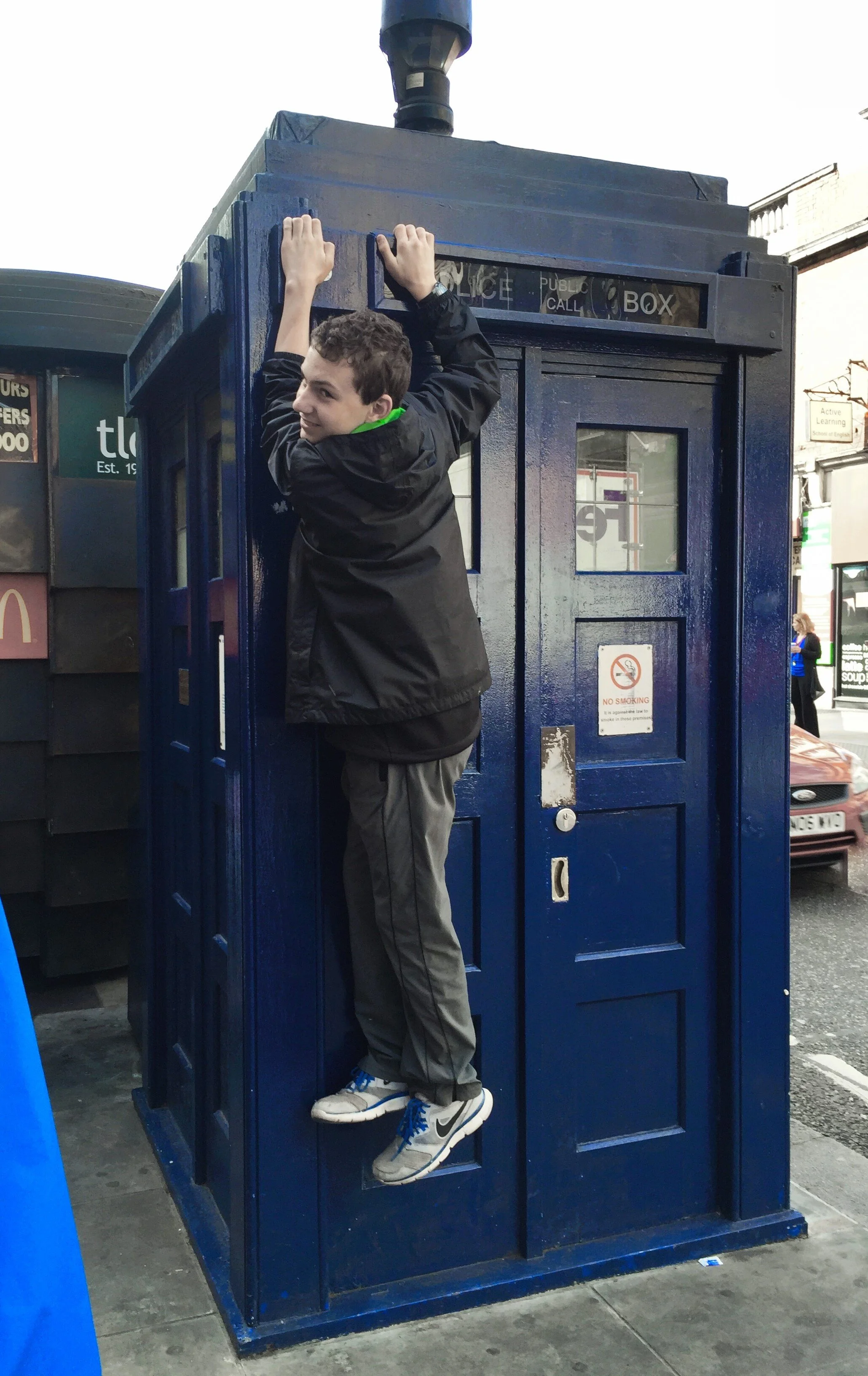
There's a saying in parenting: "You're only as happy as your unhappiest child." (There's another saying you may have heard, especially if you're in the South: "If Mama ain't happy, ain't nobody happy.") If you consider those things together, your unhappy child is now responsible for putting happiness out of reach for your entire family. That responsibility would be far too much for any child to carry. The more reasonable conclusion is that both statements are fallacy.
Each of us has a unique innate disposition that falls along a spectrum. Me, I'm ruthlessly, obnoxiously optimistic. I had to learn how not to "bright side" people with my irrepressible belief that things will always work out. It turns out that folks need space to express how they feel without someone downplaying the awfulness of whatever it is that's disturbing them. To paraphrase the author of a relationship book my husband and I read early in marriage, sometimes they need your shoulder, not your mouth.
As an optimist, I have a generally "happier" outlook than people whose natural bent is in the other direction. I'm in a group on Facebook of moms of "glass half empty" kids. We've talked about this kind of thing a lot.
Here's the truth: you can't MAKE someone else happy. Not your child; not your partner. You don't have that kind of control over other people. And another truth: sometimes you can't even make yourself happy. Feeling happiness, joy, hope — there are times those things are out of reach. But another thing I know (and this is not just my silver-lining-ness talking — it's backed up by the AFSP) if you are in a place that's dark, better times are coming. If you can just hold on, that overwhelming feeling will pass, and you'll begin to be able to see a little light again.
The American Foundation for Suicide Prevention says, regarding suicidal crisis and access to lethal means, "Remember: those who don’t have immediate access to a means of killing themselves don’t simply find another way. Most live through it and regain their usual ways of coping. Removing access to firearms and all other lethal means and providing support helps get people past the intense, temporary moment of suicidal crisis … and can save a life."
I wanted Rader to be happy. As his mom in those last months of his life, I expended a bunch of emotional energy all the time just trying to get him to the point of comfortable, well short of happy. The things I tried weren't enough. And so he never had a chance to find out that what his brain was telling him — that life would always be just as intolerable as it felt when he could see no way through — was a lie. According to a study published by Cambridge University Press and cited by Mental Health America, nine of out ten people who attempt suicide and survive do not go on to die by suicide at a later date.
So, then, back to today. Happy "I Want You to be Happy Day!" I do want you to be happy. I hope you have a plan of self care that helps build up your reserves, so you're better equipped to face challenges when they come. If you're struggling with depression or have had thoughts of suicide, I implore you to make a safety plan that you can fall back on if you reach a crisis point. This can be as basic as downloading the NotOKApp and following the simple setup. Then when you need help, just push a button on your phone, and messages will be sent to trusted contacts you have chosen, to come support you (it even sends them your location information). You are worth it. Your life has so much value. I'm glad you're still here on I Want You to be Happy Day. And I want you to be here tomorrow.
Mario Monday: the joy of Charles Martinet
recognizing self injury awareness day
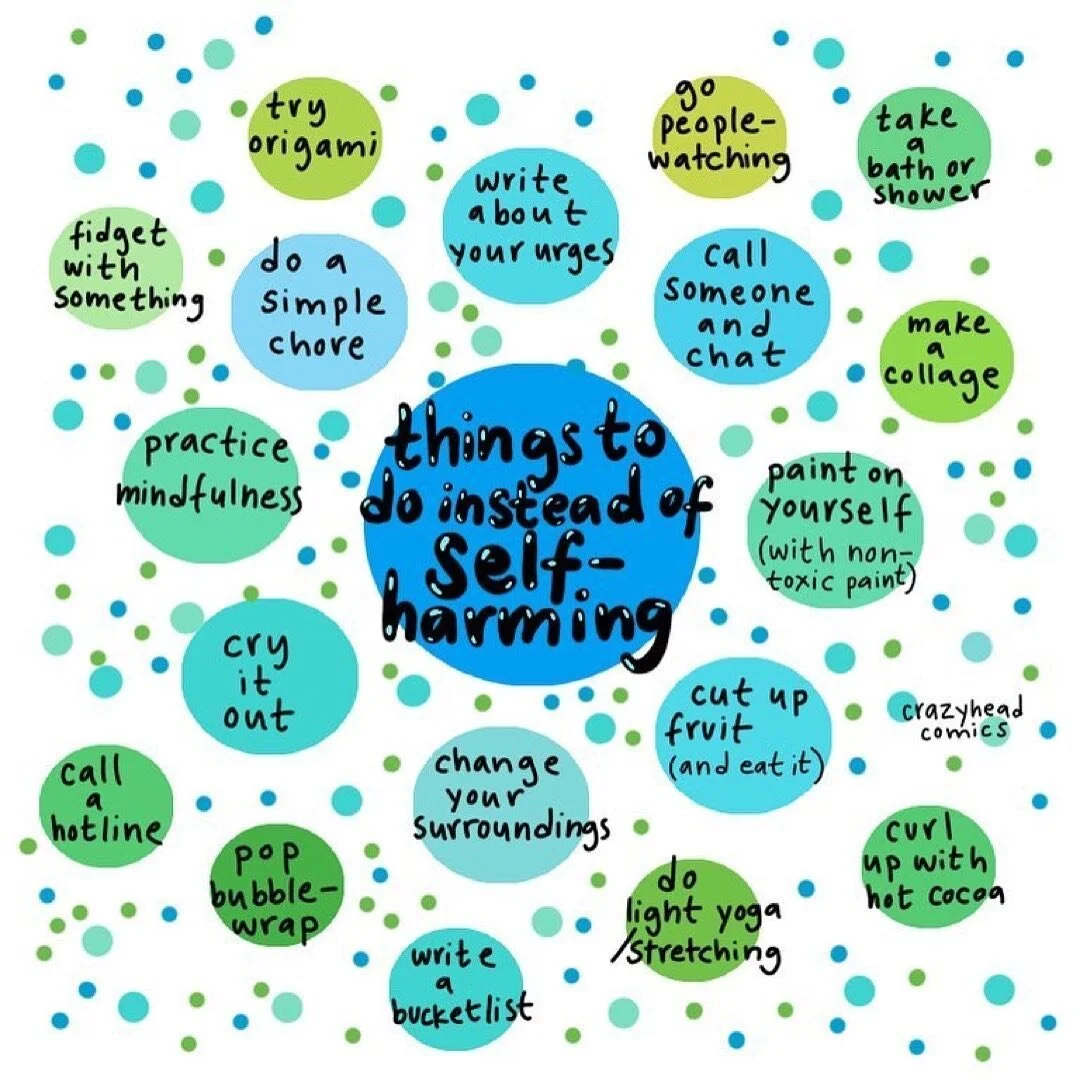
@crazyheadcomics on Instagram
leap day Mario!
are therapists trained to help suicidal people?
what if we approached death like birth?
left behind after suicide
giving voice to depression
I have another resource recommendation for you today: the Giving Voice to Depression podcast.
Here is the first of a two-part interview with Deb Sherwood, who was persuaded to hide the truth about her husband's death by suicide to "protect his professional reputation," and talks about the effect that had on her. In the second episode (episode 131), she discusses the universal struggle with what to say to someone who has lost a loved one: what was said to her that hurt, and what was truly helpful. Each episode is under 20 minutes.
Listen on SoundCloud or your favorite podcast app. You can find all episodes and learn more about the podcast and its hosts on their website, and join the Giving Voice to Depression Facebook page.
And here are the links mentioned in episode 130:
https://www.health.harvard.edu/mi…/left-behind-after-suicide
https://www.speakingofsuicide.com/…/keeping-suicide-secret/…
Thanks to Charles E. Kubly Foundation for bringing this podcast to my attention.